
The SACET (South Atlantic Cetacean) Project is a research and conservation initiative led by the EDMAKTUB Association, dedicated primarily to the study of cetaceans in the South Atlantic Ocean. The project’s first expedition took place in the Gulf of Guinea in 2020. Building on that mission, the upcoming 2025 expedition will return to the region, with a special focus on the marine habitats surrounding the islands of São Tomé and Príncipe. In addition, the transect is being extended further south, reaching all the way to South Africa, with potential stops in Angola and Namibia, and returning to São Tomé along the same route.
Primary Objectives
Cetacean Research
Study of the species distribution, habitat use, behaviour, photo-identification, acoustics and morphometrics and body health.
Monitoring other megafauna
Study of species presence, such as sea turtles, sea birds and fish.
Habitat state assesment
Study of the pelagic zone, coastal waters, adjacent inshore waters, coral reefs and mangrove forest.
Monitoring Marine debris
Monitoring the amount of plastics and litter found in the study area.
Collaboration and outreach to local organizations
Participation and collaboration with the local entities working in the area.
The Expedition
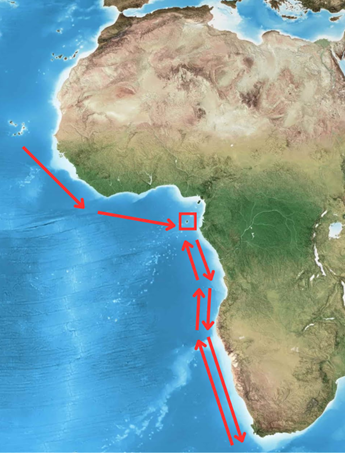
The expedition will cover a wide transect of the South Atlantic Ocean using a low-impact sailing research vessel to monitor cetaceans and other marine megafauna across one of the least-studied regions along the West African coast. The study area encompasses a diverse range of marine habitats, from deep pelagic and open-ocean environments to coastal zones and island shelves, providing extensive spatial coverage of both coastal and offshore habitats around the islands.
The expedition set sail from Cabo Verde, along the west coast of Africa, and travel through the Gulf of Guinea to the islands of São Tomé and Príncipe, where approximately four months of research will be focusing on the Southern Hemisphere humpback whales that gather in the region to breed. Following this first phase, the expedition will continue southwards following the migration route of the humpback whales towards their feeding grounds. Along the coast of Angola and Namibia with potential stops for additional in-depth surveys.The transect continues southward to South Africa, completing its course. Finally, the team will sail back north from South Africa to São Tomé and Príncipe, coinciding with the humpback whales’ return to their breeding ground. Tracing the coast of Namibia and Angola again, with potential stops for in-depth surveys. The expedition will then continue with approximately four months of research in the waters around São Tomé and Príncipe.
São Tomé and Príncipe
São Tomé and Príncipe is a biologically rich tropical archipelago with high cetacean diversity.This initiative aims to assess local marine biodiversity, with a particular focus on cetaceans and other marine fauna. The goal is to address existing knowledge gaps and enhance understanding to support conservation efforts and the sustainable use of the country’s coastal marine ecosystems. Fostering community-driven marine biodiversity management.
Main research methods
Assessment of site fidelity and identification of key areas such as breeding, feeding, and nursing grounds
Humpback Whale Breeding Ground
The occurrence of southern hemisphere humpback whales in Sao Tome has been reported since the 19th century. Several studies suggest the presence of humpback whales belonging to the South Atlantic Stock in the tropical waters of the Gulf of Guinea, that serve as breeding ground throughout the summer until late November. Humpback whale groups seem to prefer shallow waters around São Tomé Island and this was observed to be true also for waters around Principe during this study.
Random transects along the study area are being performed to identify the areas of presence of these animals as well as the group composition and main behaviours observed in order to define the use of habitat of each of the encountered species.
Other cetaceans observed in the study area
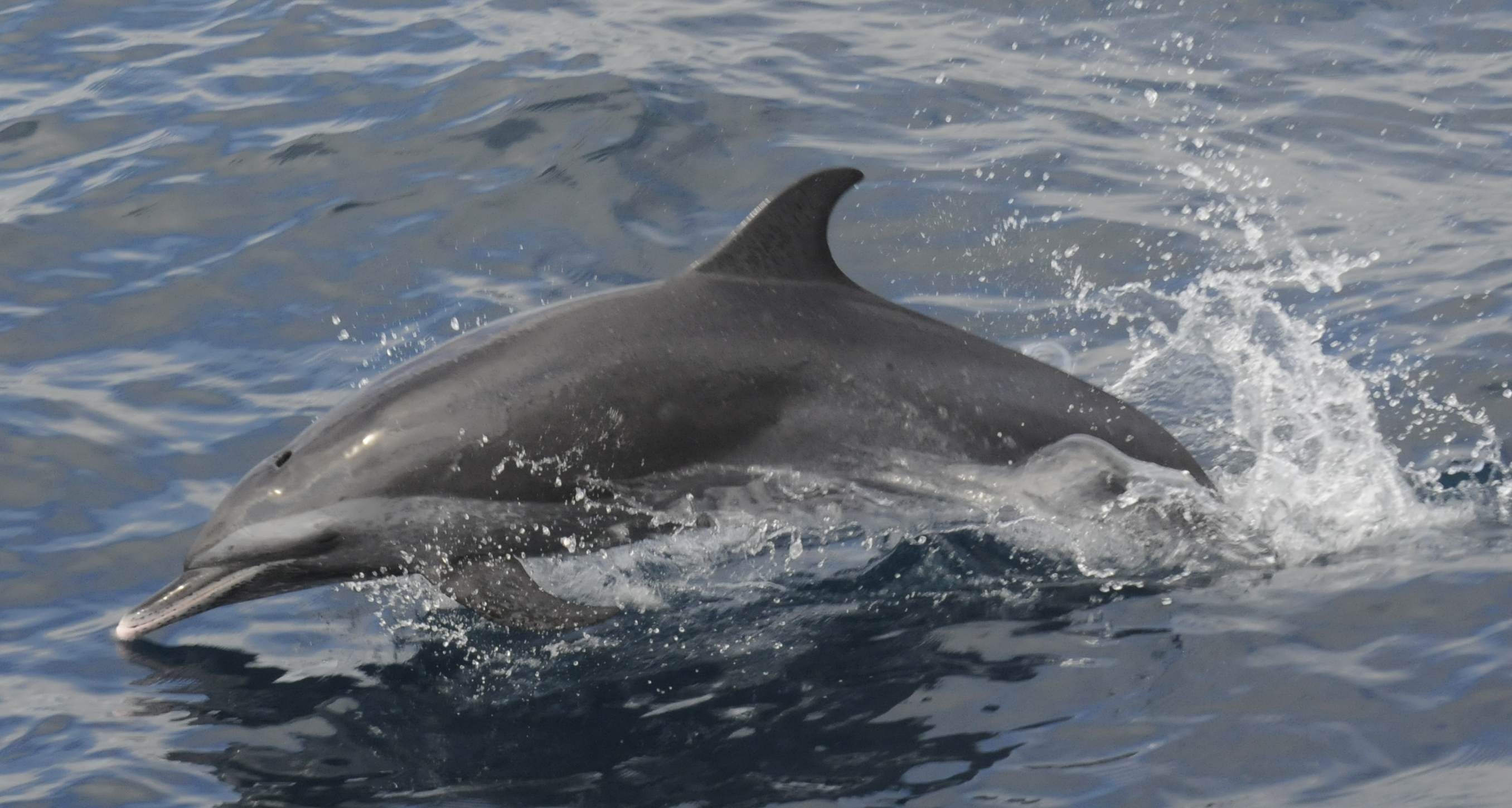
Pantropical spotted dolphins
Stenella attenuata
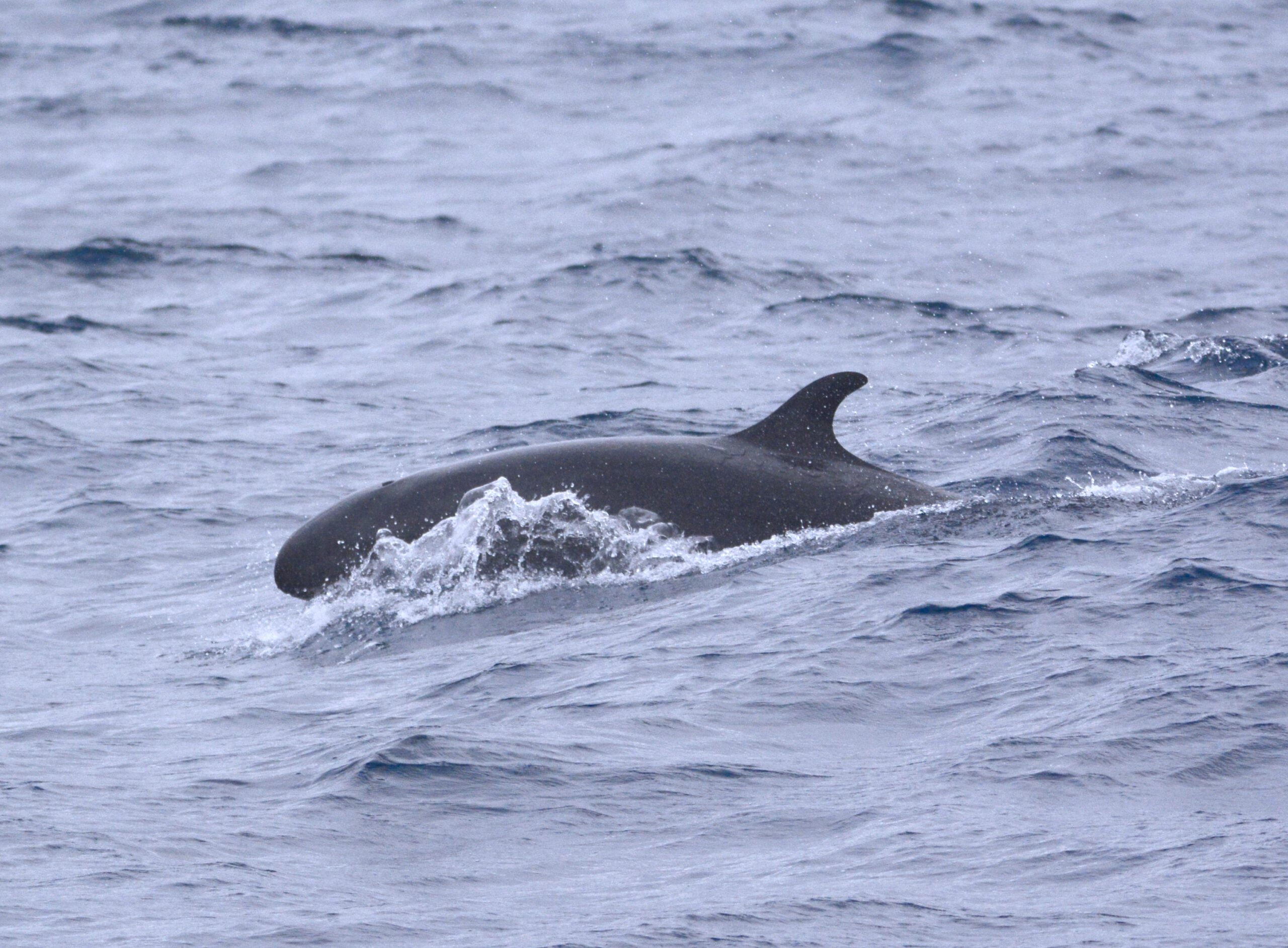
False Killer Whale
Pseudorca crassidens
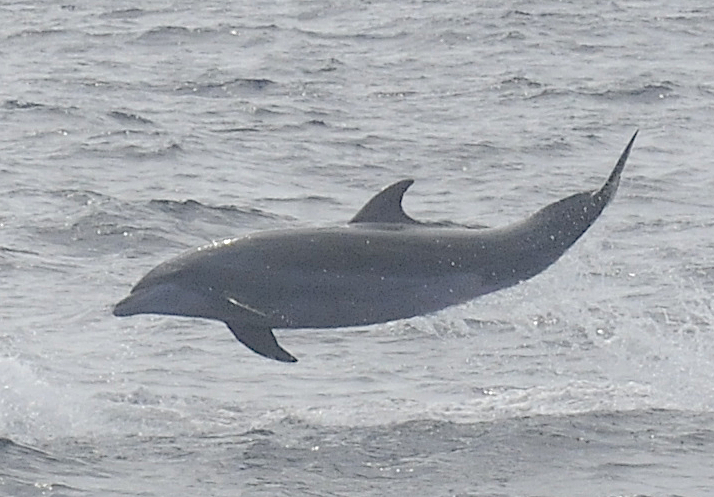
Bottlenose dolphin
Tursiops truncatus
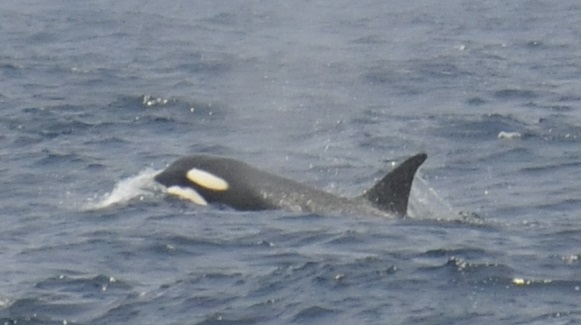
Orca
Orcinus orca
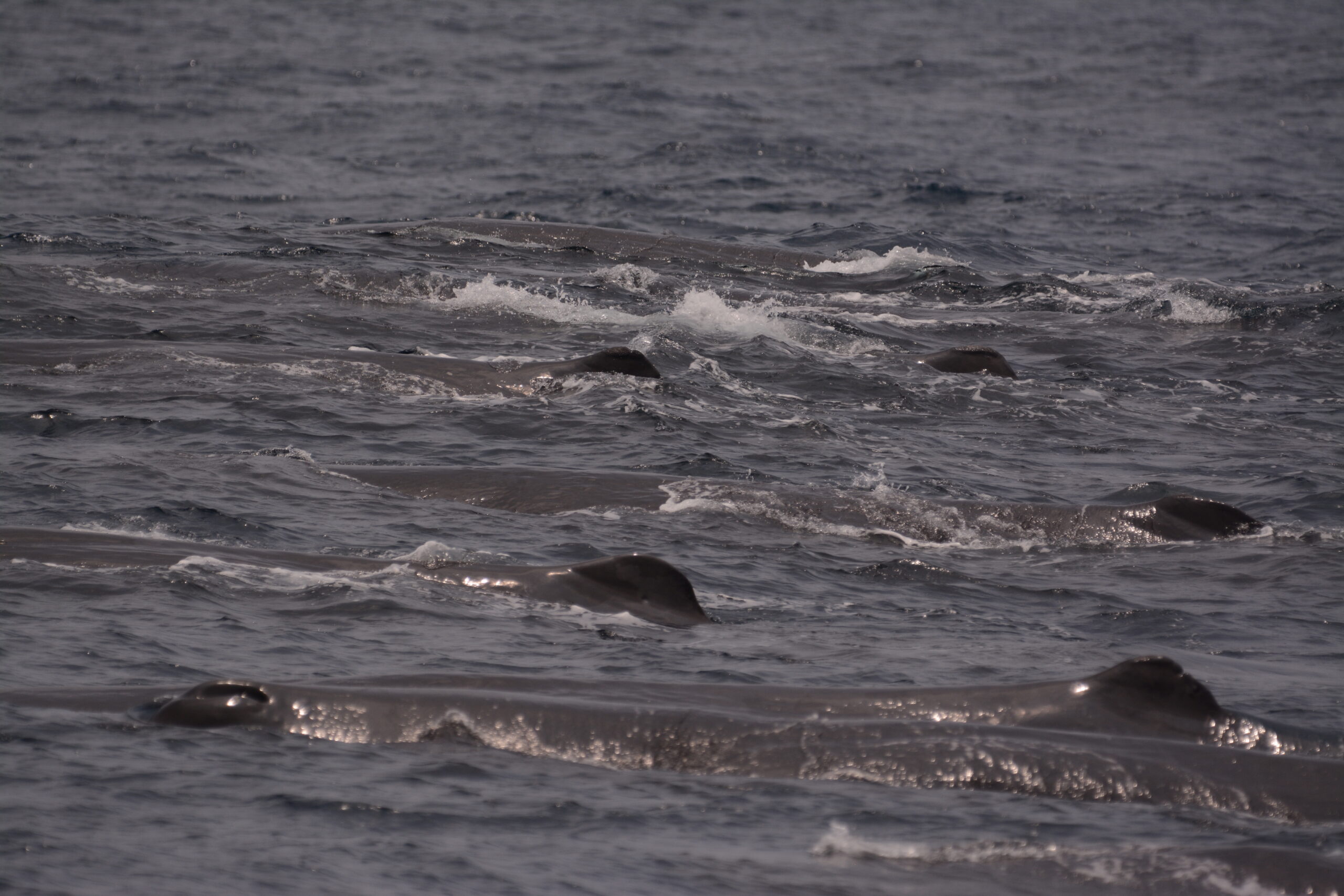
Sperm Whale
Physeter macrocephalus
Recording of vocalizations using towed hydrophone and a sound trap to study acoustic behavior and species presence.
Humpback whale songs
Acoustic surveys using a io-io or towed hydrophone are being performed to detect cetacean presence. Being able to detect dolphin whistles and clicks, sperm whale clicks and codas and humpback whale songs.
Studied through direct visual observations and the analysis of drone footage to document activity patterns, social interactions, and surface behaviors.
The use of drone to study cetacean behavior
Drones have been proven to be a key tool to study cetacean behaviour. Drones offer a new perspective that allows to observe the behaviors that occur close to the surface in a non-invasive way.
Estimation of population size, structure, and composition based on sighting data and drone-based observations.
Combining boat and drone observations to describe the population composition and movements
The data and pictures obtained from the boat and the images obtained with the drone allow us to get an understanding on the group composition and identity.
Photo-identification of Humpback whales
Boat based photo-ID
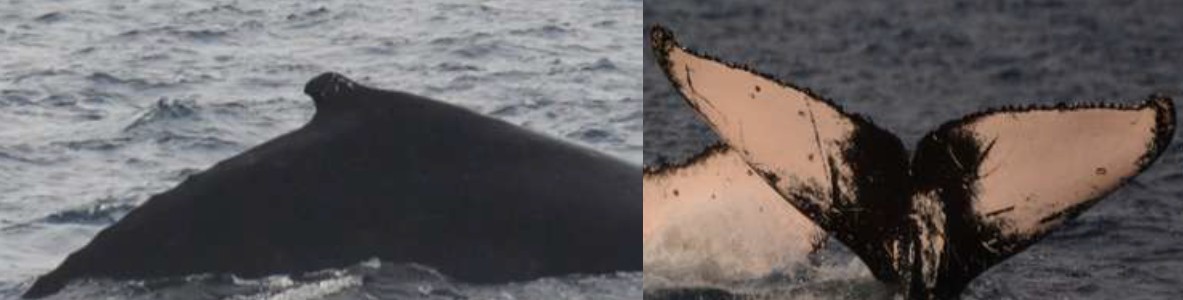
The humpback whale photo-identification from the vessel can be done by taking pictures of the fluke of the animals when diving or playing on the surface and through lateral dorsal fin pictures.
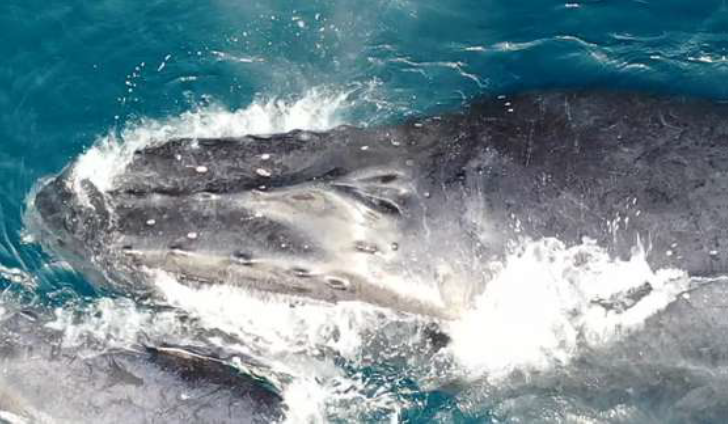
Drone photo-ID
Flying over the animals focusing on the head region. Checking scars, pigmentation and tubercles of the head.
Evaluation of body condition and health, as well as size determination, using drone photogrammetry.
The use of drone has allowed to get morphometrics and body condition information of humpback whales
Studying the morphometry and body condition of the animals in the area can support key information about the population health in the area.
Main Results
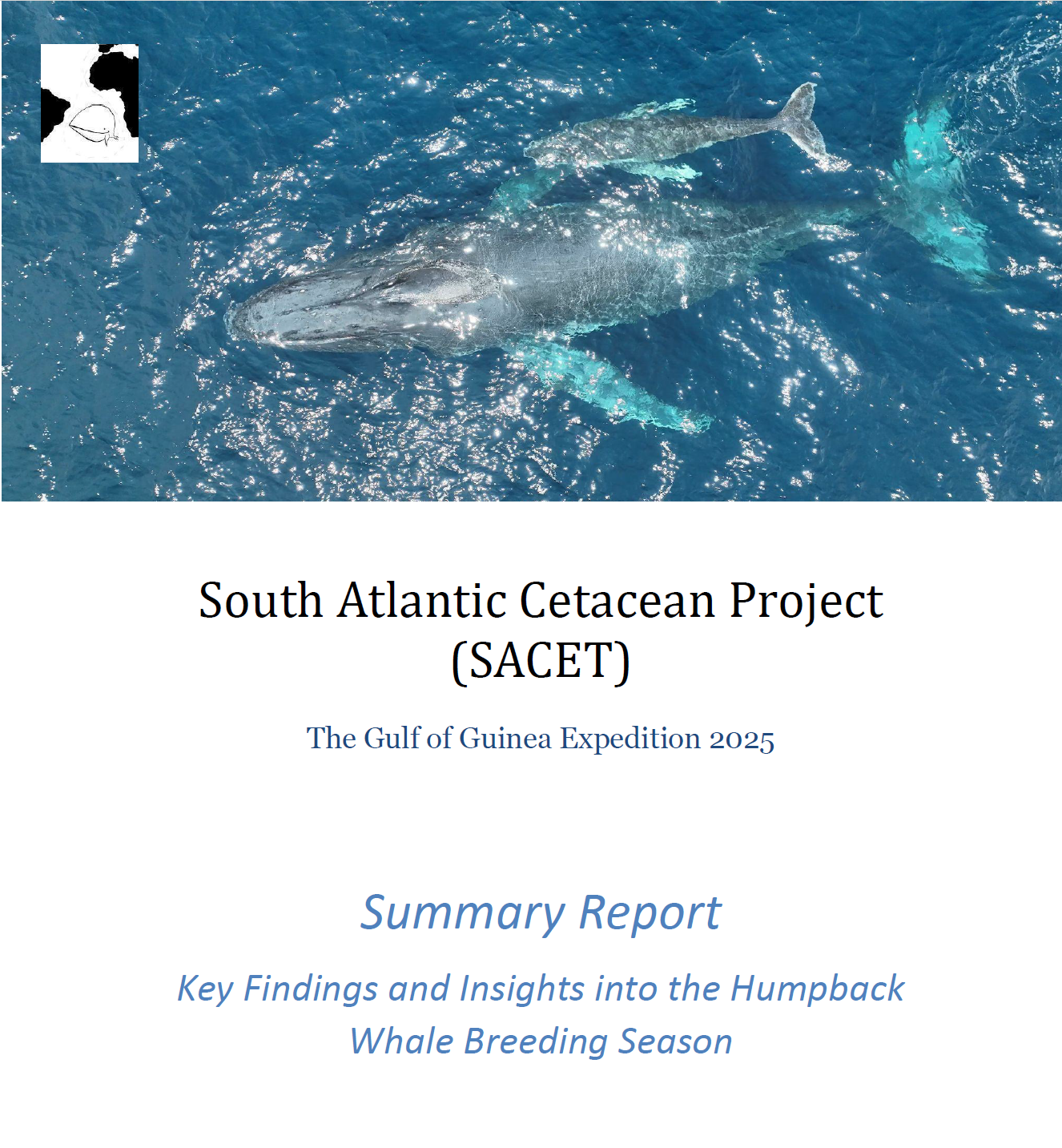
Humpback whales use the waters of São Tomé and Príncipe as important breeding and calving grounds. They migrate to the archipelago between July and October. The SACET Project’s first expedition occurred in 2020, running from late August to late November, while the second expedition took place in 2025 between August and October. During both expeditions, surveys were carried out whenever weather conditions allowed, with survey locations determined largely by prevailing weather, whale presence, and logistical considerations.
During both expeditions, mother and calf pairs were frequently spotted within the study area, underscoring the ecological importance of this breeding ground. More than 120 individual whales were identified and included in the first humpback whale photo-ID catalogue of the region created by EDMAKTUB. In addition, numerous other cetacean species and various types of marine megafauna, such as sharks, turtles, and seabirds were recorded in the region, further highlighting the archipelago’s remarkable biodiversity.
2025 Expedition
During the 15 days crossing between Cabo Verde and São Tomé and Príncipe, 11 brief cetacean sightings were documented, including short-finned pilot whales, oceanic ecotype bottlenose dolphins, Clymene dolphins, pantropical spotted dolphins, spinner dolphins, and rough-toothed dolphins.
63
Number of surveys
63
Humpback whale sightings
113
Number of individuals sighted
14
Mother and calf pairs
73
Number of catalogued individuals
- Mother and calf pairs ranked only as the third most commonly sighted group composition out of the four, indicating a noticeable decrease compared to 2020.
- Three individuals were matched through the global Happywhale database, confirming movements between São Tomé and Príncipe and other regions of the South Atlantic and Indian Oceans, including South Africa, Réunion, and Brazil.
- Other cetacean species recorded during the surveys included sperm whales, killer whales, bottlenose dolphins, pantropical spotted dolphins, and short-finned pilot whales.
- A unique interspecies interaction between an adult humpback whale and a pod of short-finned pilot whales was documented.
Oil exploration emerged as the most significant threat in the area due to the high levels of noise pollution generated by these activities, which negatively affect marine mammals that rely heavily on sound for navigation, communication, and other essential behaviors. Additionally, marine litter and unsustainable fishing practices pose further risks to the region’s marine life.
Our president and head of research dr. Eduard Degollada presented the main results of the SACET Project on the RTP (Rádio e Televisão de Portugal).

